Project Description
Tai Nuare is a privately stewarded 405 acre island peninsula in the Bocas del Toro archipelago of Panama, a region often called the "Galápagos of the Caribbean." Intact primary rainforest, freshwater lakes, mangroves, and living coral reef converge within a single continuous ecosystem.
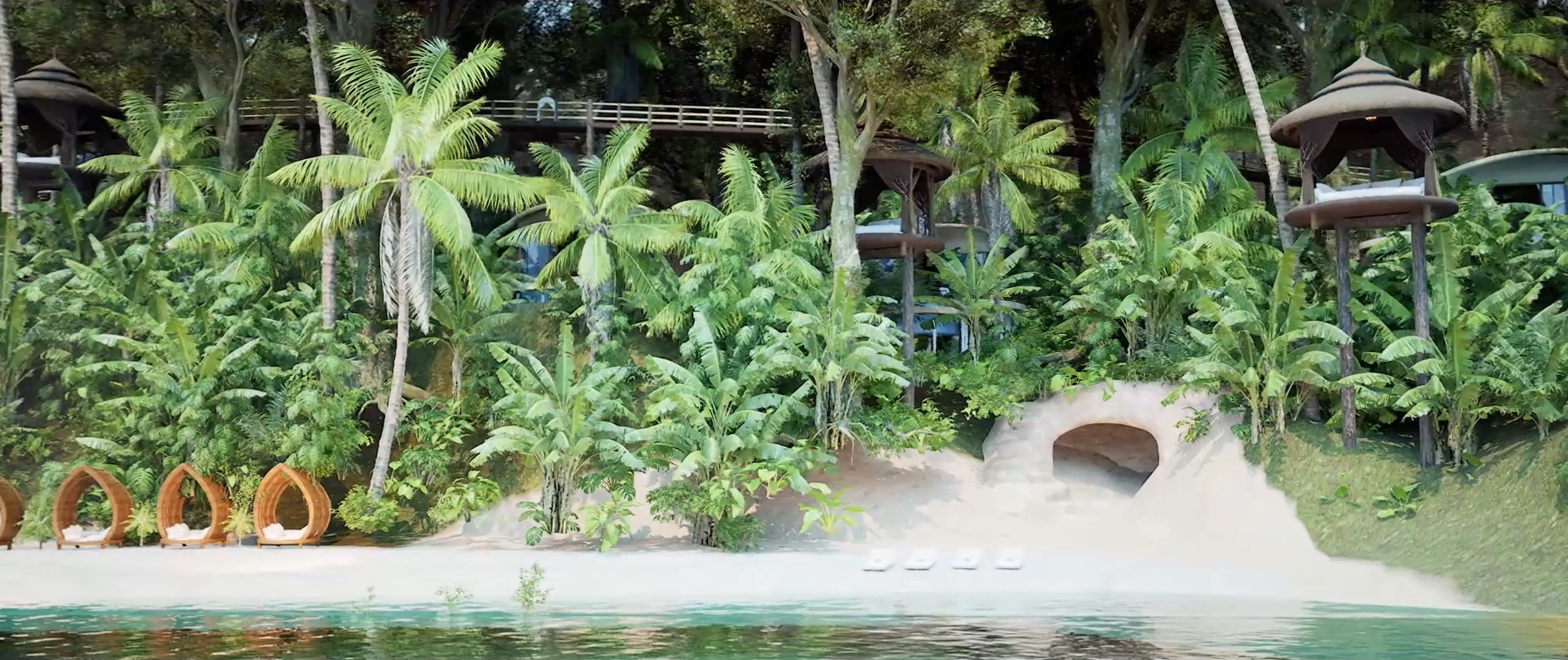
Tai Nuare is offered as a single, complete asset: 405 acres of Caribbean peninsula, held privately for two decades and appraised by CBRE at $19.14 million for the land alone. The offering includes the founder’s built overwater estate, the complete architect-designed plans for the common structures and residential sanctuaries, and alignment with Panama’s national tourism master plan. Two doors are open: full acquisition of the peninsula at $18 million, or a strategic partnership: $9 million for a 50% stake alongside the founder. What a buyer inherits is optionality: hold it as a private legacy estate, keep it wild, or carry the completed designs into development on their own terms. The moat is the asset itself: a Caribbean peninsula surrounded by vibrant living coral reef systems, blanketed by lush virgin rainforest with freshwater lakes, in a hurricane free country, that cannot be replicated at any price.
The land forms a true peninsula rather than a transit island, allowing controlled access, protected coastlines, uninterrupted viewsheds, and permanent wildlife corridors. This physical coherence creates an increasingly scarce condition: a large scale Caribbean coastal asset that feels complete in itself.
Vision & Orientation
Tai Nuare is shaped as a stewarded ecosystem rather than a destination. Hospitality and limited residential development serve as the economic engine, deliberately restrained in density, visibility, and activation. There is no ambition for mass tourism, volume programming, or extraction based growth, much of Tai Nuare's value lies in what is consciously not pursued.
The Conceptual Master Plan: five integrated zones across the peninsula, mapped in full, with the parcels and sanctuaries outlined, on The Tai Nuare Peninsula page.
Architecture & Material Integrity
All structures are architect designed and site specific, modeled onto the peninsula's natural topography rather than imposed upon it. Primary materials are teak, sourced from the on site plantation, and bamboo, sourced from outside the peninsula, designed for passive cooling, natural ventilation, and long term durability in a tropical marine environment. This reduces embodied carbon, limits supply chain exposure, and treats architecture as permanent infrastructure.
Ecological Stewardship & Governance
- Permanent conservation zones embedded in land use covenants
- Strict limits on density, footprint, and extraction, no clear cutting, no mass tourism
- Regenerative, off grid infrastructure standards
- Long term ecological monitoring and reporting
- Long term economic participation with the local Ngäbe-Buglé community in conservation, construction, and operations
Secured, and What Comes Next
Secured · Transfers With the Sale
Title to the assembled parcels · Zoning · Conceptual master plan across five integrated zones · Complete architectural design for commons and residences · The built overwater estate · Alignment with Panama’s national tourism master plan (PMTS)
For the Next Owner
Resort development permits · Infrastructure build-out · Individual construction approvals · Operator selection and branding · Project-specific permits as the vision is carried forward
Full documentation, including title, survey, appraisal, and design files, is available to qualified parties in the data room.
Project Positioning
Tai Nuare is structured as a conscious coastal real asset, not a philanthropic initiative. Capital partners participate in income generating hospitality and limited residential assets, while conservation, governance, and ecological performance standards are treated as non negotiable operating fundamentals.
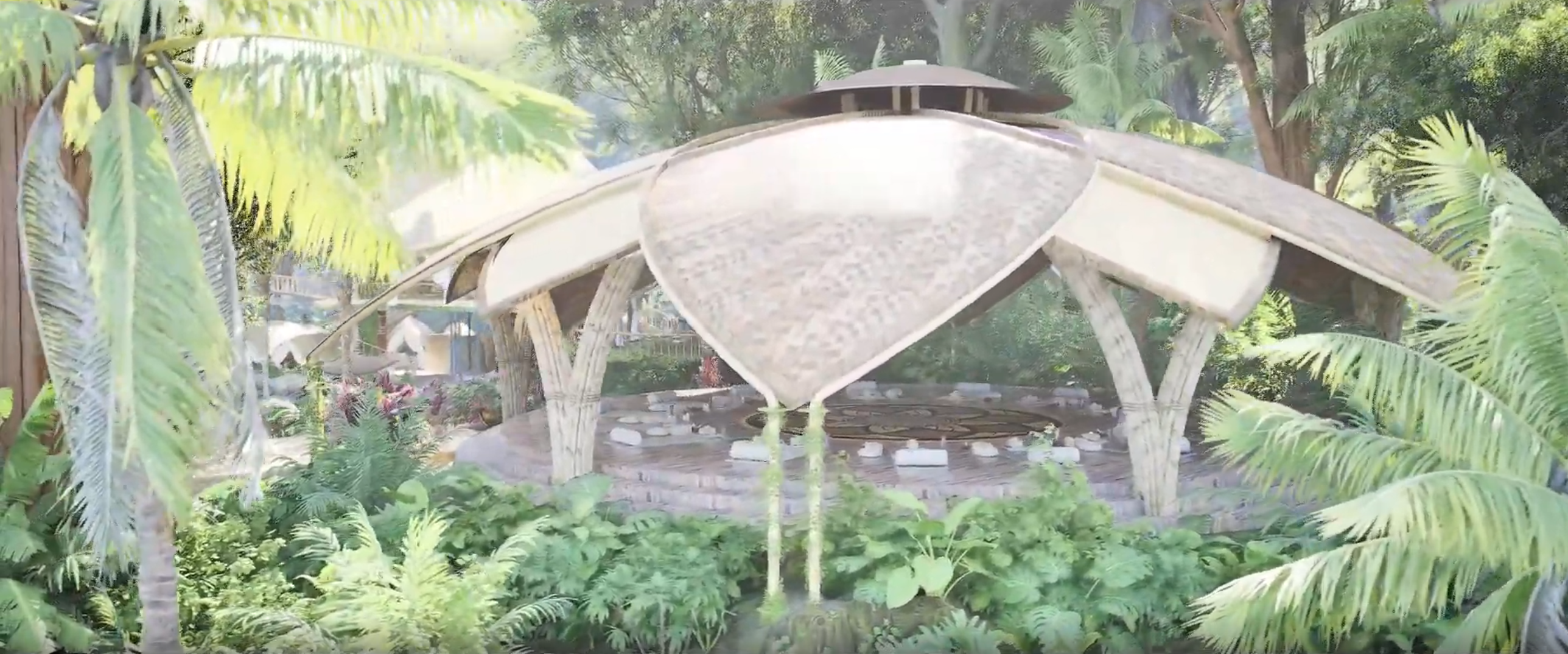
Positioning is a curated ownership community for individuals who value privacy and exclusivity, environmental stewardship, long term asset appreciation, and shared ethos. This enables controlled inventory release, strong brand integrity, high owner alignment, and premium pricing power.
Hospitality Positioning, A Sosei · Aman · Six Senses Hybrid
Commissioned hospitality advisory work benchmarked Tai Nuare against the world's leading regenerative and sanctuary led operators. The conclusion: Tai Nuare should feel closer to Sosei than to a hotel, hospitality is the expression, not the purpose.
Purpose Before Hospitality (Sosei lens)
Tai Nuare exists first as a regenerative sanctuary. All hospitality decisions serve ecological regeneration, cultural respect, land stewardship, and human restoration. Revenue is a consequence, not a driver.
Sanctuary Is Non Negotiable (Aman lens)
Silence over stimulation, privacy over visibility, space over density. Clear limits on guest numbers, events, noise, lighting, and movement, regardless of revenue potential.
Wellness Is a Practice (Six Senses lens)
Wellness depth over frequency, integrated into the life of the land, not programmed as an amenity menu.
- Define non negotiables explicitly: guest caps, silence and privacy rules, resident primacy
- Invite operators to align, not to lead
- Avoid any operator that requires volume to function
Aligned with Panama's National Sustainable Tourism Master Plan
Tai Nuare is not an isolated development. It advances the priorities Panama itself has set for the future of its tourism economy, positioning the project alongside national strategy rather than apart from it.
The National Strategy
The Plan Maestro de Desarrollo Turístico Sostenible (PMTS 2020 to 2025) is Panama's national tourism strategy, developed by the Panama Tourism Authority (ATP) with international consultants and adopted as public policy. Its aim is to move Panama away from high volume mass tourism toward higher value, lower impact, sustainability led tourism, with the stated goal of becoming Latin America's leading sustainable destination.
The Tourism, Conservation, and Research Model
At the heart of the plan is the TCI model, the framework Tai Nuare is built to embody:
Tourism
Tourism creates real economic opportunity for the region and the country.
Conservation
Tourism directly protects forests, oceans, wildlife, and ecosystems, rather than consuming them.
Research
Scientific study and education become part of the visitor experience itself.
To reinforce this model, the ATP has partnered with the Smithsonian Tropical Research Institute (STRI). Tai Nuare's roadmap includes a formal research partnership with a university, marine biology program, or conservation institution, aligning the project directly with this national framework.
How Tai Nuare Advances National Priorities
Conservation
Rainforest and marine conservation, with a permanent reef sanctuary and protected preserve.
Regeneration
Low density, carbon positive, off grid infrastructure and a regenerative food forest.
Wellness
Longevity and wellness tourism as the core of the guest experience.
Culture
Deep partnership with the Ngäbe-Buglé community, whose adults have signed on in support of the project.
Nature Immersion
Canopy walks, trail systems, and wildlife experiences woven into daily life.
Education
Environmental education and, in time, a resident research presence.
Marine Tourism
Reef stewardship, coral restoration, and low impact marine access.
Longer Stays
A residential and retreat model that encourages longer, higher value visits.
The Kinds of Projects Panama Wants
The Master Plan names its priority project types as differentiators that set Panama apart: eco lodges, nature immersion, wellness tourism, indigenous cultural experiences, marine tourism, scientific tourism, regenerative tourism, protected forests, wildlife experiences, and low density developments. Tai Nuare delivers across nearly all of them within a single asset.
Positioning for Support
Projects aligned with the PMTS are better positioned for government collaboration, tourism promotion, conservation partnerships, international sustainability grants, biodiversity funding, and carbon and regeneration initiatives. Alignment strengthens the case for partnership and support, and it signals to investors that the project advances national objectives rather than working around them.
Sources: Panama Sustainable Tourism Master Plan (PMTS 2020 to 2025), Panama Tourism Authority (ATP); ATP and Smithsonian Tropical Research Institute cooperation agreement.